


GLOW: BPC-157, TB-500 & GHK-Cu
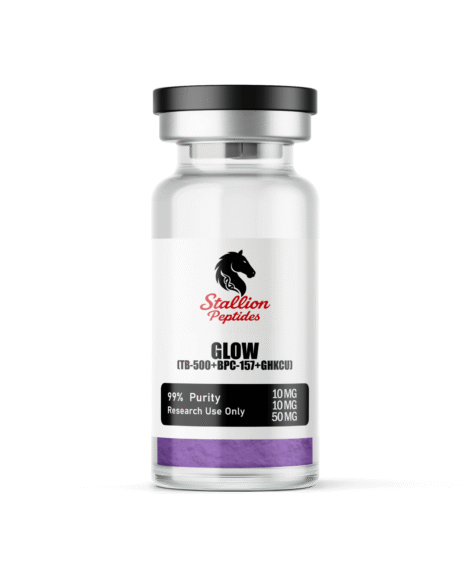
GLOW combines three research peptides — TB-500, BPC-157 and GHK-Cu — in a single lyophilized vial. This guide covers what each component is, which mechanisms the published laboratory literature studied for each, and why researchers run them together or separately — with sources.
At a glance
| BPC-157 | TB-500 | GHK-Cu | |
|---|---|---|---|
| Type | Synthetic pentadecapeptide (15 aa) | Synthetic peptide derived from thymosin β4 | Copper(II) complex of a tripeptide |
| Sequence / composition | GEPPPGKPADDAGLV | Active region of thymosin β4 (43-aa parent peptide) | Gly-His-Lys + Cu²⁺ |
| Origin | Partial sequence of a gastric protein (“body protection compound”) | Thymosin β4, an intracellular actin-binding peptide | Naturally occurring in human plasma (described 1973) |
| Main mechanism studied | Angiogenesis & growth-factor signaling (VEGFR2) | G-actin binding / sequestering | Copper binding; gene-expression modulation |
| Content per GLOW vial | 10 mg | 10 mg | 50 mg |
| Supplied form | Lyophilized powder, combined in one sealed vial (GLOW) or as single-compound vials | ||
BPC-157: angiogenic signaling
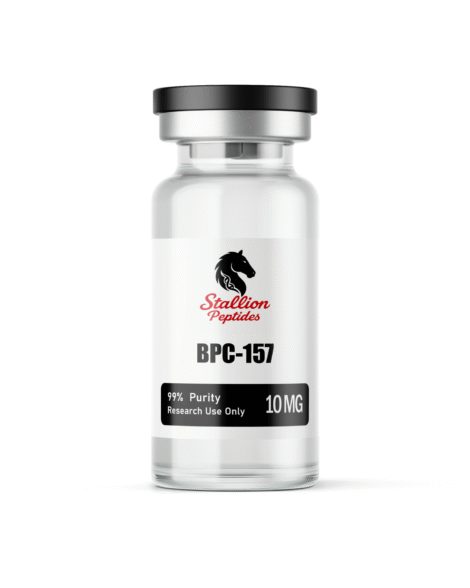
BPC-157 is a synthetic 15-amino-acid peptide (GEPPPGKPADDAGLV) derived from a partial sequence of a gastric protein termed body protection compound. A literature review summarized its study in rodent models of gastrointestinal, tendon, ligament, muscle and bone injury, and discussed its interaction with standard angiogenic growth factors.1 In one mechanistic study, BPC-157 increased vessel density in chick chorioallantoic-membrane and endothelial tube-formation assays, and raised VEGFR2 expression and VEGFR2–Akt–eNOS signaling in cultured vascular endothelial cells and in a rat hind-limb ischemia model.2
TB-500: the thymosin β4 connection
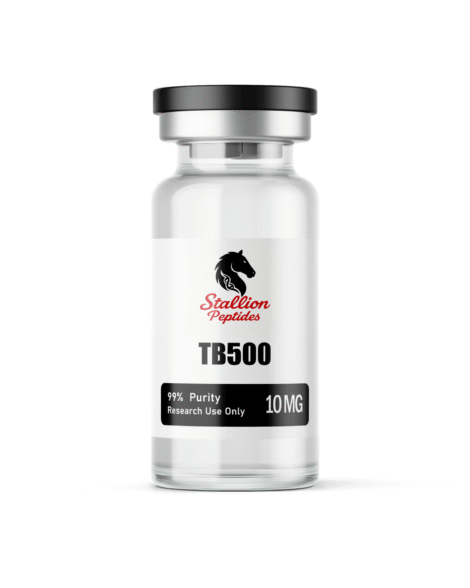
Thymosin β4 is a 43-amino-acid peptide characterized as a major actin-sequestering peptide: it binds monomeric G-actin and was shown to be identical to the actin-sequestering peptide previously called Fx.3 TB-500 is the name used for a synthetic version of an active region of thymosin β4; liquid chromatography–mass spectrometry methods for its detection were published in 2012.4
GHK-Cu: the copper tripeptide
GHK (glycyl-L-histidyl-L-lysine) is a naturally occurring tripeptide first described in human plasma in 1973; it binds copper(II) ions, and the copper complex is GHK-Cu. The GHK sequence is also present in the α2(I) chain of type I collagen. A 2018 review summarized laboratory work in dermal and lung fibroblast cultures and in rodent, rabbit and pig models, together with gene-expression analyses (Connectivity Map) in which GHK was reported to up- and down-regulate a large number of human genes.5
Together or separately? The three components were characterized in separate literatures with different proposed mechanisms — angiogenic growth-factor signaling (BPC-157), actin binding (TB-500 / thymosin β4), and copper binding with broad gene-expression effects (GHK-Cu). We are not aware of peer-reviewed studies that characterize this specific three-peptide combination, so designs using the blend typically include single-component arms to attribute any observed effect.
Choosing between them in a study design
- Combined format: when the research question is about the combination itself, one vial with a fixed ratio (TB-500 10 mg, BPC-157 10 mg, GHK-Cu 50 mg) simplifies preparation.
- Single-component arms: separate BPC-157 and TB-500 vials let a design attribute effects to each peptide.
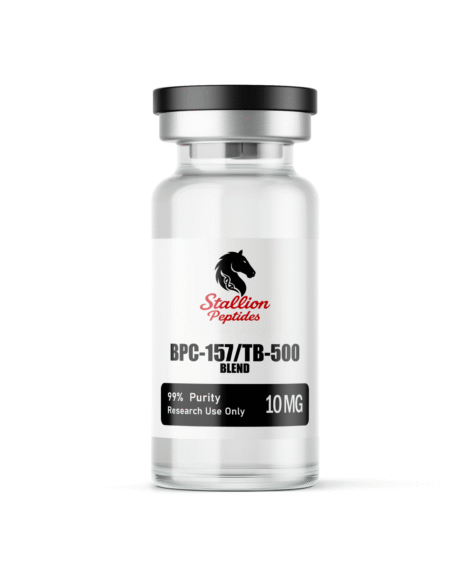
- Two-peptide arm: the BPC-157/TB-500 blend, without GHK-Cu, isolates the contribution of the copper peptide — see BPC-157 vs TB-500.
- Handling: the blend and the single compounds are supplied lyophilized and handled the same way — see storage below.
Storage & handling
Store sealed, lyophilized vials dry and protected from light at −20 °C for long-term storage. Once reconstituted, keep refrigerated at 2–8 °C and divide into single-use aliquots. Reconstitution is typically performed with sterile bacteriostatic water. Full guide: peptide storage & handling.
GLOW, BPC-157 & TB-500 at Stallion Peptides
Sealed, lyophilized vials. Orders before 3 PM Pacific time ship the same day by USPS to the United States and Puerto Rico — free over $200.
Frequently asked questions
What is in the GLOW blend?
GLOW combines three research peptides in one lyophilized vial: TB-500 (10 mg), BPC-157 (10 mg) and GHK-Cu (50 mg).
How do BPC-157, TB-500 and GHK-Cu differ?
BPC-157 is a synthetic 15-amino-acid peptide studied mainly in angiogenesis and growth-factor signaling research. TB-500 is a synthetic peptide based on an active region of thymosin β4, an actin-binding peptide. GHK-Cu is the copper(II) complex of the tripeptide glycyl-histidyl-lysine.
Has the three-peptide combination been studied as a blend?
The published literature characterizes each component separately. We are not aware of peer-reviewed studies of this specific combination, so study designs using the blend typically include single-component arms for comparison.
How should the blend be stored?
Sealed and lyophilized at −20 °C, dry and away from light; once reconstituted, refrigerated at 2–8 °C in single-use aliquots.
References
- Seiwerth S, Rucman R, Turkovic B, et al. BPC 157 and standard angiogenic growth factors. Gastrointestinal tract healing, lessons from tendon, ligament, muscle and bone healing. Curr Pharm Des. 2018;24(18):1972–1989. DOI 10.2174/1381612824666180712110447
- Hsieh MJ, Liu HT, Wang CN, et al. Therapeutic potential of pro-angiogenic BPC157 is associated with VEGFR2 activation and up-regulation. J Mol Med (Berl). 2017;95(3):323–333. PubMed 27847966
- Safer D, Elzinga M, Nachmias VT. Thymosin beta 4 and Fx, an actin-sequestering peptide, are indistinguishable. J Biol Chem. 1991;266(7):4029–4032. PubMed 1999398
- Ho EN, Kwok WH, Lau MY, et al. Doping control analysis of TB-500, a synthetic version of an active region of thymosin β4, in equine urine and plasma by liquid chromatography–mass spectrometry. J Chromatogr A. 2012;1265:57–69. PubMed 23084823
- Pickart L, Margolina A. Regenerative and protective actions of the GHK-Cu peptide in the light of the new gene data. Int J Mol Sci. 2018;19(7):1987. PubMed 29986520
This summary collects published laboratory literature as a research reference. Products are sold for laboratory research use only. Not for human or veterinary use.
