At a glance
| BPC-157 | TB-500 | |
|---|---|---|
| Origin | Synthetic 15-amino-acid peptide (pentadecapeptide) derived from a gastric protein sequence | Synthetic peptide modeled on the actin-binding region of thymosin β4 |
| Main research focus | Angiogenesis signalling (VEGFR2) | Actin dynamics & cell migration |
| Typical models | Endothelial cell culture, CAM assay, rodent models | Cell-migration assays, rodent models |
| Supplied as | Lyophilized powder, sealed vial | Lyophilized powder, sealed vial |
BPC-157
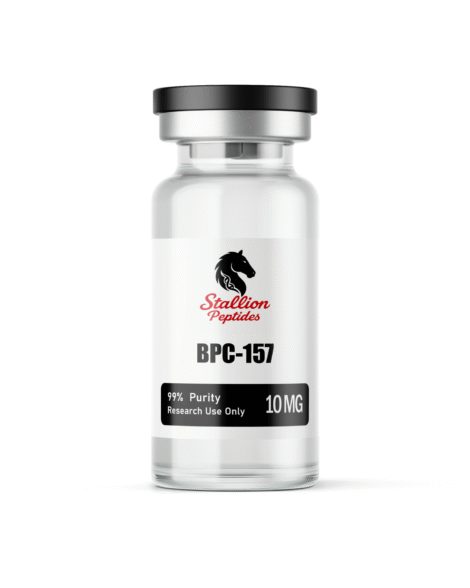
BPC-157 is a synthetic pentadecapeptide with the sequence GEPPPGKPADDAGLV (C₆₂H₉₈N₁₆O₂₂, ≈ 1419.5 g/mol).3 In endothelial cell culture it was reported to increase VEGFR2 expression and internalisation and to activate the VEGFR2–Akt–eNOS signalling pathway, alongside increased endothelial tube formation; in vivo work used the chick chorioallantoic membrane (CAM) assay and a rat hind-limb ischemia model.1
TB-500
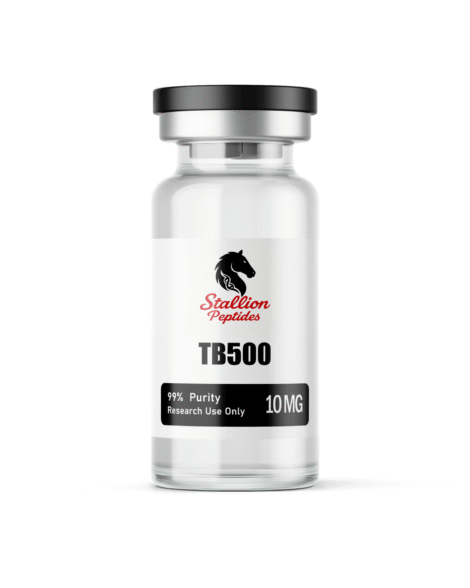
TB-500 is a synthetic research peptide modeled on the actin-binding region of thymosin β4, a naturally occurring 43-amino-acid peptide. Thymosin β4 is studied for its role in binding actin and promoting cell migration, and in research on stem/progenitor-cell mobilisation and new blood-vessel formation in laboratory models.2
Key difference for researchers: BPC-157 is mostly studied through growth-factor receptor signalling (VEGFR2), while TB-500/thymosin β4 is studied through actin binding and cell migration — which is why the two are often compared, or combined, in the same experimental designs.
Why researchers compare — or combine — them
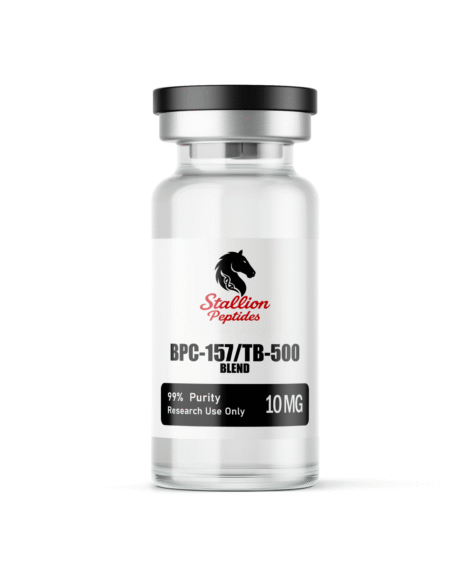
Because they are studied through different mechanisms, the two peptides are frequently included side by side in comparative designs. For combined studies, a pre-mixed BPC-157 / TB-500 blend is also available.
BPC-157 chemical data
| Property | Value |
|---|---|
| Sequence | GEPPPGKPADDAGLV |
| Molecular formula | C₆₂H₉₈N₁₆O₂₂ |
| Molecular weight | ≈ 1419.5 g/mol |
| CAS number | 137525-51-0 |
Storage & handling
Store lyophilized (powder) vials sealed, dry and away from light — at −20 °C for long-term storage. Once reconstituted, keep refrigerated at 2–8 °C. Reconstitution is typically performed with sterile bacteriostatic water.