What is TB-500?
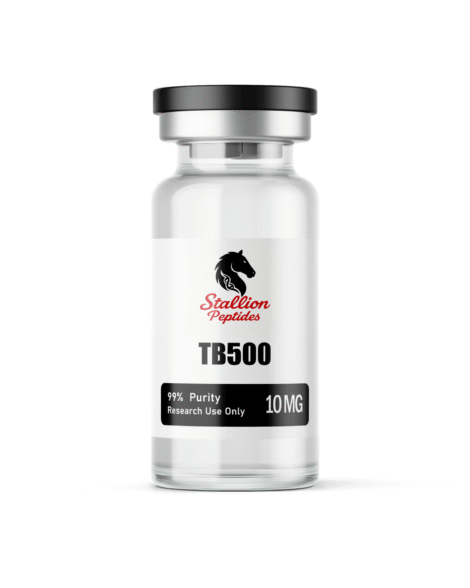
TB-500 is a synthetic research peptide modeled on the actin-binding region of thymosin β4 (Tβ4), a naturally occurring 43-amino-acid peptide found in most cells. Tβ4 is one of the main proteins that bind monomeric (G-)actin, controlling how much actin is available to assemble into filaments.1 The short sequence LKKTETQ (Tβ4 residues 17–23) is the central actin-binding motif, and TB-500 lets researchers study that region separately from the full protein.2
Thymosin β4 and the actin cytoskeleton
Cells keep a large pool of unpolymerised actin ready for rapid rebuilding of the cytoskeleton. By sequestering G-actin, Tβ4 buffers that pool; releasing it allows filaments to grow at the leading edge of a moving cell. This makes Tβ4 — and peptides based on its binding region — central tools in research on cell shape and motility.1
Beyond actin binding, laboratory and animal studies have examined Tβ4 in cell migration, in the mobilisation of stem/progenitor cells and in the formation of new blood vessels.2
Common research areas
- Actin polymerisation — G-actin sequestration and filament-assembly assays.1
- Cell migration — scratch (wound-closure) and transwell assays in vitro.2
- Angiogenesis models — endothelial migration and tube formation.2
- Comparative designs — side by side with BPC-157, studied through growth-factor signalling instead. See BPC-157 vs TB-500.
Key point for researchers: “TB-500” and “thymosin β4” are not interchangeable — Tβ4 is the full 43-residue protein, while TB-500 is a synthetic peptide built around its actin-binding region. State exactly which one was used when reporting results.
Chemical & physical data
| Property | Value |
|---|---|
| Parent protein | Thymosin β4 (43 amino acids) |
| Core actin-binding motif | LKKTETQ (Tβ4 residues 17–23) |
| Peptide type | Synthetic research peptide |
| Supplied form | Lyophilized (freeze-dried) powder, sealed vial |
Storage & handling
Store lyophilized (powder) vials sealed, dry and away from light — at −20 °C for long-term storage. Once reconstituted, keep refrigerated at 2–8 °C. Allow vials to reach room temperature before opening to avoid condensation. Reconstitution is typically performed with sterile bacteriostatic water; see our storage & handling guide.