


Storing Research Peptides in a Tropical Climate: Puerto Rico Guide
Heat, humidity, power outages and hurricane season: a practical guide for labs in Puerto Rico on keeping lyophilized peptides properly stored from the moment the package arrives to the last aliquot, with technical and scientific sources.
Quick summary
| Situation | Recommended lab practice |
|---|---|
| Sealed lyophilized vial, long-term storage | Freezer at −20 °C or colder, dry and protected from light |
| Short-term use (sealed vial) | Refrigerator at 2–8 °C |
| Reconstituted peptide | Refrigerator at 2–8 °C, in single-use aliquots; avoid long-term storage in solution |
| Before opening a cold vial | Let it reach room temperature, ideally in a desiccator |
| Freeze–thaw | Avoid repeated cycles: that is what aliquots are for |
| Power outage or hurricane | Keep units closed, backup cooling and a temperature log |
Why heat and humidity matter in Puerto Rico
On the island, temperature and relative humidity stay high most of the year, and that directly affects a material like lyophilized peptide. Peptides tend to be hygroscopic: they absorb water from the air, which lowers peptide content by weight and may reduce stability.1 Sigma-Aldrich likewise notes that moisture greatly reduces the long-term stability of peptides and proteins.2
A study from the Department of Chemistry at the University of Puerto Rico, Río Piedras Campus, exposed a model lyophilized protein (α-chymotrypsin) to relative humidities from 11% to 96% and found that it aggregated and lost activity as humidity increased.4 It is not a catalog peptide, but it illustrates the mechanism well: in a humid environment, dry powder stops being truly dry as soon as the vial is opened or condensation forms on it.
Heat, meanwhile, speeds up degradation reactions. In a tropical climate the rule is simple: dry, cold and dark, with as little time out of the freezer as possible.
What to do when the package arrives
Orders to Puerto Rico ship via USPS and typically arrive in 3–5 business days after dispatch, with no customs. Lyophilized peptides tolerate shipping at room temperature,1 but on arrival it pays to act quickly:
- Collect the package promptly. Don’t leave it in a mailbox, a car or a sunny balcony.
- Inspect the vials: caps and seals intact, labels legible.
- Label and log the receipt date and lot in your lab inventory.
- Store immediately at −20 °C if you won’t use them soon; reference-peptide manufacturers instruct storing at −20 °C immediately on receipt.3
- Don’t open a cold vial. Let it reach room temperature first, preferably inside a desiccator, so moisture doesn’t condense on the powder.13 In the island’s humid air this step matters even more.
Fridge or freezer: what goes where
| Unit | What to store | Notes |
|---|---|---|
| Freezer (−20 °C or colder) | Sealed lyophilized vials for long-term storage; frozen aliquots | Bachem recommends below −15 °C, with lower temperatures preferred1 |
| Refrigerator (2–8 °C) | Reconstituted peptide in use; sealed vials for short-term use | Solutions have a limited shelf life; Sigma-Aldrich notes they are generally stable for up to about a week at 4 °C2 |
| Room temperature | Only during transit and handling | Minimize time out of the cold |
- Aliquots: divide stock solution into single-use portions so the same vial isn’t frozen and thawed repeatedly.23
- Placement: keep vials at the back of the unit, not in the door, where temperature swings most each time it is opened.
- Sensitive sequences: peptides containing Cys, Met or Trp are more prone to oxidation, and those with Asn or Gln have a more limited shelf life in solution.1
Desiccants and light protection
In a Puerto Rico lab, desiccant isn’t an extra: it is part of the storage system.
- Keep vials in an airtight container with silica gel packs (ideally color-indicating) and replace or regenerate them when they change color.
- Use a desiccator to bring vials to room temperature before opening.
- Close each vial tightly right after use; weigh out quickly and reseal.1
- Protect vials from bright light: an opaque box or aluminum-foil wrap.23
Power outages and hurricane season
Atlantic hurricane season runs from June 1 to November 30, and outages are a reality in many parts of the island. A simple plan protects your inventory:
- Temperature logging: put a min/max thermometer or data logger in the refrigerator and the freezer, so you know whether an excursion happened and how long it lasted.
- Backup cooling: a generator, a battery/UPS sized for the unit, or at least a cooler with pre-frozen ice packs.
- Keep units closed during an outage; every opening speeds warming.
- Prioritize: know which sealed lyophilized vials and aliquots should be moved first.
- Before a storm: avoid reconstituting new vials if a long outage is expected; sealed lyophilized powder tolerates adverse conditions better than a solution.1
- Document any temperature excursion in the lab log and assess affected material per your protocol before continuing to use it.
Puerto Rico tip: if your area has frequent outages, time orders so they arrive when you can store them right away, and avoid scheduling deliveries just ahead of a forecast tropical system.
Reconstitution with sterile bacteriostatic water
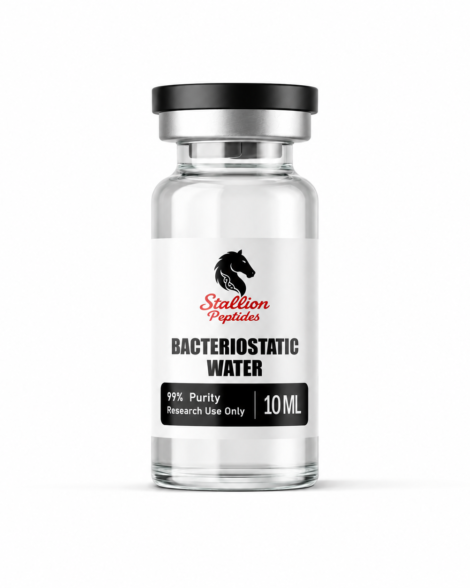
In the lab, lyophilized peptides are commonly reconstituted with sterile bacteriostatic water using aseptic technique. Once reconstituted, keep the peptide refrigerated at 2–8 °C and divided into aliquots; Bachem advises against storing peptides in solution for long periods.1 For more, see our Bacteriostatic Water in Puerto Rico guide and the general peptide storage & handling guide.
Peptides and bacteriostatic water for your Puerto Rico lab
Sealed lyophilized vials. Orders placed before 3 PM Pacific, Monday–Saturday, ship same day via USPS and reach Puerto Rico in 3–5 business days after dispatch, with no customs — free shipping over $200. Spanish-language support: support@stallionpeptides.com · +1 559 909 3612. Details on our Puerto Rico shipping page.

Frequently asked questions
Are lyophilized peptides damaged during shipping to Puerto Rico?
Lyophilized peptides tolerate shipping at room temperature. USPS shipping to Puerto Rico typically takes 3–5 business days after dispatch; on arrival, store them immediately at −20 °C if you won’t use them soon.
What temperature should lyophilized peptides be stored at?
For long-term storage, at −20 °C or colder, sealed, dry and protected from light. For short-term use, a 2–8 °C refrigerator is acceptable.
How does Puerto Rico’s humidity affect peptides?
Peptides are hygroscopic: they absorb water from the air, which reduces stability. Store them with desiccant and let the vial reach room temperature, ideally in a desiccator, before opening it.
How long does a reconstituted peptide keep?
Peptide solutions have a limited shelf life. In the lab they are kept refrigerated at 2–8 °C, divided into single-use aliquots, and long-term storage in solution is not recommended.
What should I do with my peptides during an outage or hurricane?
Keep the refrigerator and freezer closed, use backup cooling (generator, UPS or a cooler with ice packs), log temperature with a min/max thermometer, and document any excursion before continuing to use the material.
References
- Bachem. Handling and Storage Guidelines for Peptides. Bachem Knowledge Center. bachem.com
- Sigma-Aldrich (Merck). Handling and Storage Guidelines for Peptides and Proteins. Technical article. sigmaaldrich.com
- Thermo Fisher Scientific. Important Information on your HeavyPeptides (handling and storage instructions). thermofisher.com (PDF)
- Flores-Fernández GM, Pagán M, Almenas M, Solá RJ, Griebenow K. Moisture-induced solid state instabilities in α-chymotrypsin and their reduction through chemical glycosylation. BMC Biotechnol. 2010;10:57. PubMed 20696067
This guide compiles published technical recommendations as a reference for laboratory handling. Products sold for laboratory research use only. Not for human or veterinary use.
