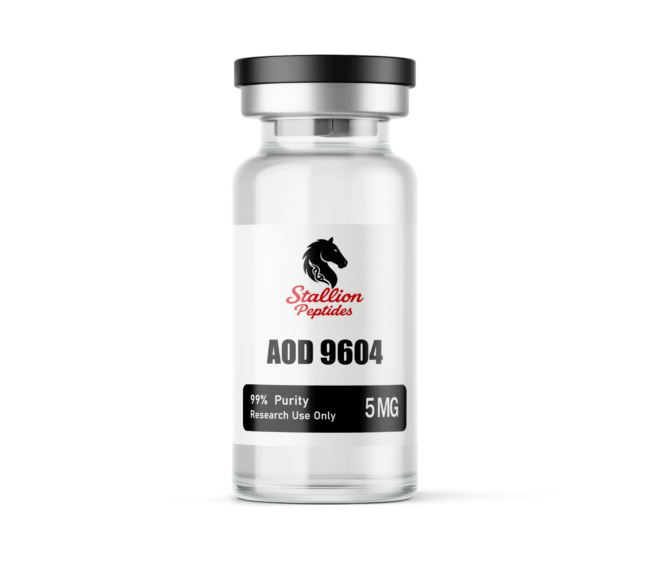
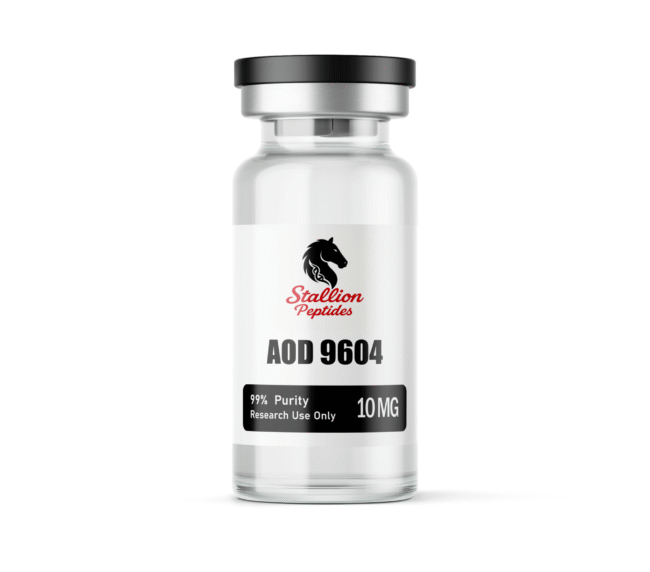
What is AOD-9604?
AOD-9604 is a synthetic 16-amino-acid peptide based on the C-terminal region (residues 177–191) of human growth hormone (hGH), with a tyrosine added at the N-terminus. It contains a disulfide bridge between its two cysteines, which forms a ring in the molecule.12
It was designed to study the lipolytic activity associated with this region of hGH in isolation, without the full structure of the hormone.1
What the laboratory literature reports
In a mouse-model study published in Endocrinology, AOD-9604 and hGH were compared for their effects on lipid metabolism after chronic treatment. Both compounds increased expression of the β3-adrenergic receptor (β3-AR) in obese mice; in mice lacking β3-AR (knock-out), AOD-9604 still acutely increased energy expenditure and fat oxidation.1
The authors concluded that the lipolytic activity of these compounds does not act directly through β3-AR, although the increase in its expression could contribute to greater lipolytic sensitivity.1
Key point for researchers: AOD-9604 makes it possible to study the lipolytic region of hGH in isolation — a useful tool for separating mechanisms in lipid-metabolism models.
Common research areas
- Lipid metabolism — lipolysis and fat oxidation in rodent models.1
- Adrenergic signalling — the role of the β3-adrenergic receptor.1
- Structure–activity relationships — growth-hormone fragments versus the full hormone.
- Peptide stability — cyclic, disulfide-bridged peptides.
Chemical & physical data
| Property | Value |
|---|---|
| Molecular formula | C₇₈H₁₂₃N₂₃O₂₃S₂ |
| Sequence | YLRIVQCRSVEGSCGF (disulfide bridge Cys7–Cys14) |
| Length | 16 amino acids |
| Origin | hGH 177–191 + N-terminal tyrosine |
| Supplied form | Lyophilized powder, sealed vial |
Storage & handling
Store lyophilized (powder) vials sealed, dry and away from light — at −20 °C for long-term storage. Once reconstituted, keep refrigerated at 2–8 °C. Allow vials to reach room temperature before opening to avoid condensation. Reconstitution is typically performed with sterile bacteriostatic water. New to these terms? See the peptide research glossary.